
The election of Kemi Badenoch as the leader of Britain’s Conservative Party signals a transformative moment in British politics and carries profound implications for young people, particularly in Britain and former British colonies and protectorates like Nigeria and Cameroon. Badenoch’s leadership isn’t just a testament to her personal tenacity; it embodies a broader shift toward embracing youthful perspectives, diversity, and female representation in spaces of power. Her ascent holds a unique symbolic value for young people and women, who may often feel excluded from political arenas dominated by older, established figures. By exploring the significance of her election from the perspective of youth and female leadership, we can better appreciate its potential ripple effect across continents.
Youth Leadership and Political Representation
At 44, Badenoch is relatively young by political leadership standards, especially in the context of the UK Conservative Party, traditionally associated with older, long-serving politicians. Her presence at the helm injects youthful energy and new perspectives into British politics, breaking from the typical image of party leaders in the UK. This milestone in British politics provides a blueprint for what younger generations can achieve with determination and a vision for change. Young people in Britain, often underrepresented and overlooked in political processes, can find in Badenoch a leader who more closely represents their age group and, potentially, their values and aspirations.
For youth in former British colonies, such as Cameroon and Nigeria, Badenoch’s election resonates deeply. Many African countries grapple with leadership structures that are predominantly controlled by older generations, where political influence remains concentrated among a select group of longstanding figures. Badenoch’s rise offers an alternative narrative: that youth can indeed lead at the highest levels. Her success challenges the perception that leadership positions are beyond the reach of younger candidates and that only age or experience confers authority. By redefining who can hold power, Badenoch is inspiring a generation of young Africans to envision themselves in leadership roles and to push against restrictive political hierarchies in their own countries.
The Power of Representation: Diversity and Female Empowerment
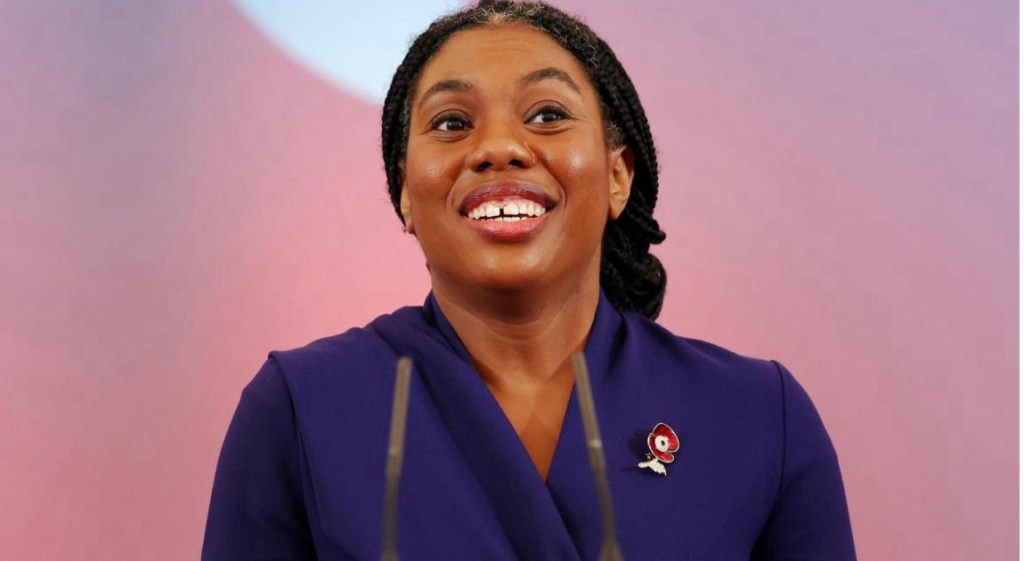
As a woman of Nigerian descent, Badenoch’s leadership has powerful implications for representation, particularly for women of African heritage in Britain and across the African continent. In Britain, her ascent challenges racial and gender stereotypes within the Conservative Party, one of the oldest and most traditional political institutions in the country. Her presence at the top of this institution demonstrates that diversity in leadership is not only possible but valuable, reinforcing to young women and girls of diverse backgrounds that they too can aspire to such roles.
For African countries like Cameroon and Nigeria, Badenoch’s example of a woman of African descent leading a major political party in the West challenges traditional gender norms and expectations within African political structures. Female representation in African politics remains limited, often confined to token positions or roles in areas traditionally associated with women, such as social and family policy. Badenoch’s rise to leadership in a major global power underscores the capacity of women to lead across all domains, from economics and defense to foreign policy. Her success sends a message to African societies that women, when given opportunities and the support to lead, can make significant contributions to national and global discourse.
This shift is particularly inspiring in countries like Nigeria and Cameroon, where cultural expectations and gender roles can limit women’s political ambitions. Badenoch’s leadership serves as a rallying point for female leaders across Africa, encouraging them to aspire to high-level positions and to break through systemic barriers that have traditionally excluded them. Her example may embolden young African women to pursue political careers and advocate for policies that promote gender equality and women’s empowerment, fostering a new generation of leaders committed to reshaping African political landscapes.
A New Chapter for British Politics and Global Inspiration
Kemi Badenoch’s election as the Conservative Party leader in Britain is not just a significant moment for British youth and women; it marks a broader paradigm shift in global politics. Her rise reflects a growing trend in many democracies where the younger generation, more connected through technology and social media, demands greater representation and diversity in leadership. Her story speaks to an interconnected generation, one that sees the barriers of race, gender, and age as increasingly arbitrary and outdated. Badenoch’s leadership could be the beginning of a more inclusive approach to politics, where competence and vision are more valued than the status quo.
This broader vision is deeply relevant for former British colonies in Africa, where young people make up a large portion of the population. Youth-led movements across Africa have already demonstrated an appetite for political reform and greater representation, as seen in recent protests and calls for accountability in countries like Nigeria and Cameroon. Badenoch’s success encourages these young African voices to pursue political involvement and believe in the possibility of transforming their political landscapes.
In summary, Kemi Badenoch’s election as leader of the Conservative Party is more than a personal achievement; it represents a new era of inclusivity, youth representation, and female empowerment. For young people and aspiring leaders in Britain and Africa, particularly women, her example serves as a beacon of possibility. Badenoch’s story challenges longstanding narratives about who is qualified to lead and brings a sense of hope and ambition to young people everywhere, encouraging them to break down barriers, pursue their aspirations, and contribute to a world where leadership truly reflects the diversity of its people
 Jimmy Yab