
🎬 ÉPISODE 3: Ahidjo fonde l’État unique : fin du multipartisme, début de l’autocratie

En 1960, le Cameroun devient officiellement indépendant.
Du moins, c’est ce que proclament les textes.

Car dans les faits, le pouvoir reste vertical, centralisé, et sous influence.
Et les partis politiques issus de la lutte anticoloniale — ceux qui avaient survécu à la clandestinité — sont rapidement marginalisés, infiltrés, ou dissous.

Dès 1962, Ahidjo fait adopter des lois d’exception qui limitent drastiquement la liberté d’association et d’opinion.
La presse est contrôlée, les syndicats muselés, les opposants arrêtés ou exilés.

Mais c’est en 1966 que tout bascule.
Lire la suite 🎬 ÉPISODE 3: Ahidjo fonde l’État unique : fin du multipartisme, début de l’autocratie

Du Bureau du Premier Ministre au Silence de la Présidence : Pourquoi le MLDC Propose 4 Vice-Présidents Collégiaux Régionaux pour Refonder le Cameroun

Cet article propose une analyse approfondie de la structure exécutive du Cameroun, suggérant une transition vers un État Développementaliste Communautaire fondé sur un fédéralisme à quatre régions. L’auteur évoque l’inefficacité du Premier ministère, héritier d’un centralisme postcolonial, à travers des expériences personnelles et l’échec du Salon Industriel et Commercial Chine-Afrique Francophone. Il défend l’idée d’une Vice-présidence collégiale régionale, qui favoriserait une représentation territoriale équilibrée et une gouvernance partagée. Par une approche comparative, notamment avec le Nigeria, la Bosnie-Herzégovine et la Bolivie, l’article démontre que ce modèle peut enrichir le dialogue politique et assurer une représentation équitable dans un Cameroun multiculturel. … Lire la suite Du Bureau du Premier Ministre au Silence de la Présidence : Pourquoi le MLDC Propose 4 Vice-Présidents Collégiaux Régionaux pour Refonder le Cameroun

Building a Cameroon–Nigeria Axis for Structuring South–South Development

In a global context of shifting power poles, Cameroon remains deeply anchored in diplomatic frameworks inherited from colonialism, even as South–South dynamics are redrawing the paths of development. This article puts forward a strategic alternative led by the Mouvement pour la Libération et le Développement du Cameroun (MLDC): the creation of a structured bilateral cooperation axis between Cameroon and Nigeria, framed by the Community Developmental State (CDS) model. Drawing inspiration from Asian models of planned industrialization and pragmatic diplomacy, this partnership could accelerate regional integration, reinforce Cameroon’s economic sovereignty, and stabilize border zones through development-oriented diplomacy. The analysis draws upon recent economic data, academic references, and the author’s experience as president of the Francophone China–Africa Observatory (OCAF). … Lire la suite Building a Cameroon–Nigeria Axis for Structuring South–South Development

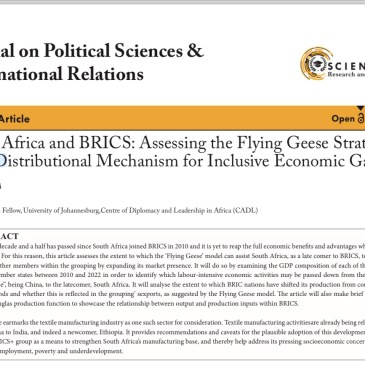
Review of SELE YALAGHULI’s article, « South Africa and BRICS: Assessing the Flying Geese Strategy as a Re-Distributional Mechanism for Inclusive Economic Gains » by Jimmy Yab

Introduction Sele Yalaghuli’s article, South Africa and BRICS: Assessing the Flying Geese Strategy as a Re-Distributional Mechanism for Inclusive Economic Gains, provides a compelling analysis of South Africa’s role within the BRICS economic bloc. The author employs the Flying Geese model to explore industrial redistribution strategies that could enable South Africa to address its pressing … Lire la suite Review of SELE YALAGHULI’s article, « South Africa and BRICS: Assessing the Flying Geese Strategy as a Re-Distributional Mechanism for Inclusive Economic Gains » by Jimmy Yab

PAUL BIYA INAUGURE LE PALAIS DES SPORTS; MAIS BOUDE L’ASSEMBLÉE NATIONALE: UN SYMBOLE D’UNE INSTITUTION EN CRISE

L’inauguration par Paul Biya du Palais des sports de Yaoundé, construit par les Chinois, contraste fortement avec l’absence d’une cérémonie similaire pour le siège flambant neuf de l’Assemblée nationale, également bâti par la Chine. Ce choix soulève des interrogations sur la perception et la crédibilité de l’institution parlementaire au Cameroun. S’agit-il d’un désaveu du président de l’Assemblée ou d’une crise plus profonde de la représentativité et du fonctionnement de l’institution ? En analysant les symboles et implications politiques de cet acte, cet article explore les tensions qui minent le parlement camerounais et leur portée pour la gouvernance nationale. … Lire la suite PAUL BIYA INAUGURE LE PALAIS DES SPORTS; MAIS BOUDE L’ASSEMBLÉE NATIONALE: UN SYMBOLE D’UNE INSTITUTION EN CRISE

BALTHAZAR: Scandal in Equatorial Guinea: Sex Tapes, Political Assassination, Corruption, Embezzlement and Power Struggles

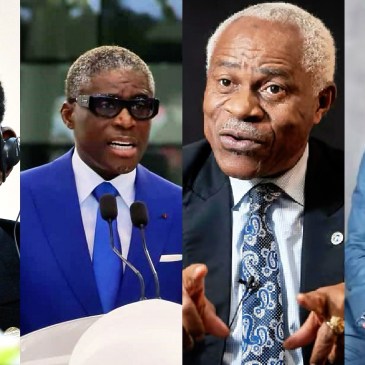
A significant scandal in Equatorial Guinea has emerged involving Baltasar Ebang Engonga, the head of tax administration, after hundreds of explicit videos were leaked. The situation exposes extreme corruption and political rivalries, particularly as Engonga faces accusations of embezzlement and arrest, creating opportunities for Vice President Teodorín to consolidate power. … Lire la suite BALTHAZAR: Scandal in Equatorial Guinea: Sex Tapes, Political Assassination, Corruption, Embezzlement and Power Struggles

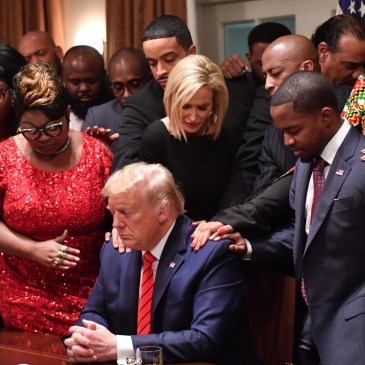
Donald Trump et les Afro-Américains : Une Relation Controversée

L’élection de Donald Trump en tant que président des États-Unis suscite des réflexions sur ses relations avec les Afro-Américains et les Africains. Ses déclarations controversées, souvent perçues comme racistes, ont renforcé les débats sur la discrimination. Son retour pourrait exacerber les tensions raciales et réduire les préoccupations des minorités. … Lire la suite Donald Trump et les Afro-Américains : Une Relation Controversée

Presentation and Discussion of the book titled: « Construction d’un État Développementaliste Communautaire: Le Cameroun »

Dear friends, I am pleased to announce the upcoming presentation and discussion of our new book, titled “Building a Community-Based Developmental State: Cameroon. A Development Policy Project through Local Community Networking”. This work presents a bold vision for the development of Cameroon and sub-Saharan Africa, based on mobilizing and structuring local communities to build a … Lire la suite Presentation and Discussion of the book titled: « Construction d’un État Développementaliste Communautaire: Le Cameroun »

Donald Trump and Africa: What to Expect in His Second Term

Donald Trump and Africa: What to Expect in His Second Term As Donald Trump assumes office once again as the 47th President of the United States, many are looking to assess what his return to the White House might mean for Africa. Trump’s previous term (2017-2021) was marked by a controversial and often divisive approach … Lire la suite Donald Trump and Africa: What to Expect in His Second Term

Kemi Badenoch, the leader of Britain’s Conservative Party: A New Era for Youth and Women in Politics

Kemi Badenoch’s election as leader of Britain’s Conservative Party signifies a transformative shift in politics, emphasizing youth, diversity, and female empowerment. As a young woman of Nigerian descent, her leadership inspires young people and women in Britain and former colonies like Nigeria and Cameroon, challenging traditional hierarchies and encouraging political engagement. … Lire la suite Kemi Badenoch, the leader of Britain’s Conservative Party: A New Era for Youth and Women in Politics

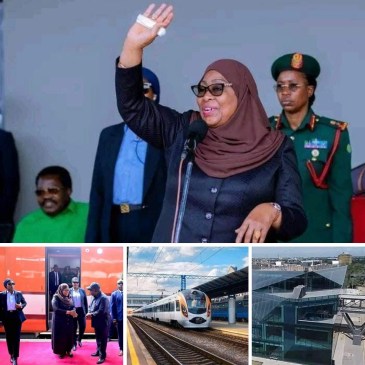
Transforming Tanzania: Female Leadership and the Electric Railway

During my visit to Tanzania, I witnessed the transformative leadership of President Samia Suluhu Hassan, the first female president in East Africa. Her initiatives, particularly the electric railway project, demonstrate significant progress in national development. Hassan’s leadership exemplifies the potential of female governance in promoting inclusivity and sustainable growth across Africa. … Lire la suite Transforming Tanzania: Female Leadership and the Electric Railway

Le système Biya, pire ennemi du Cameroun à l’international ?, de Jeune Afrique

L’article de Georges Dougueli souligne les obstacles que le Cameroun impose à ses citoyens cherchant des postes internationaux, par crainte de concurrence pour le pouvoir. Il critique le manque de soutien gouvernemental et préconise que promouvoir ses talents à l’international pourrait améliorer l’image et l’influence du pays. … Lire la suite Le système Biya, pire ennemi du Cameroun à l’international ?, de Jeune Afrique

Decolonizing Curriculum in Africa : The Case Against Kant and Racism

The book « Kant and the Politics of Racism » critiques the racial biases in Kant’s philosophy, mirroring those of Enlightenment figures like Hume and Hegel. It argues that including such thinkers in African curricula undermines decolonization efforts, reinforces colonial hierarchies, and impacts students’ self-perception, urging a shift towards African philosophical contributions. … Lire la suite Decolonizing Curriculum in Africa : The Case Against Kant and Racism

Obasanjo vs Global Leaders: Africa’s Diplomatic Future

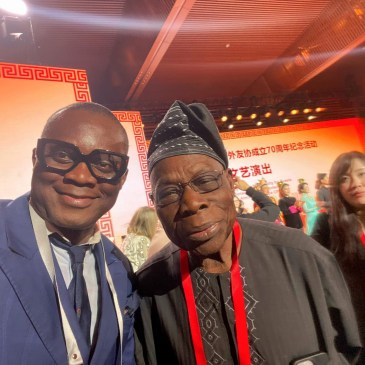
Olusegun Obasanjo emerges as the premier candidate to lead African diplomacy on the global stage, surpassing Naledi Pandor and Moussa Faki Mahamat. His extensive experience and international stature enable him to effectively represent Africa’s interests amidst major diplomats like Wang Yi, Sergey Lavrov, and Antony Blinken, advocating for equitable global governance. … Lire la suite Obasanjo vs Global Leaders: Africa’s Diplomatic Future